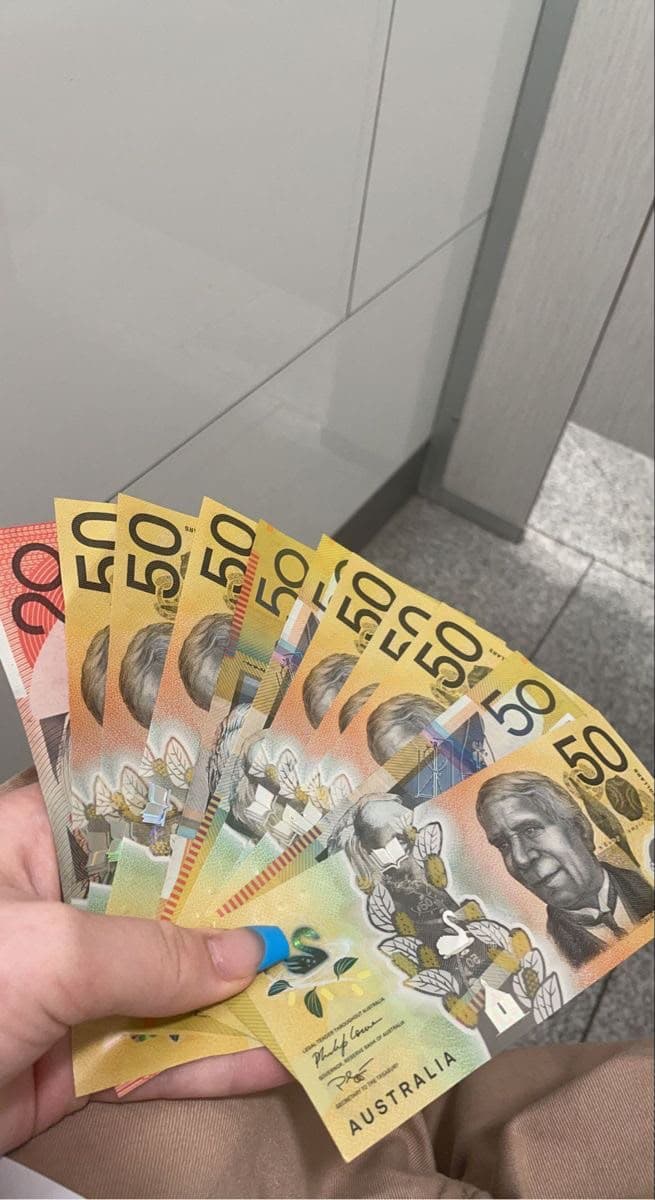
Parents, teachers and party hosts search for an Australian play money set for the same reason: they want notes and coins that look Australian, feel sturdy and are clearly toys. Big retailers carry basic sets, school suppliers carry classroom packs and specialist makers carry film-grade notes. This guide compares where to buy Australian play money, and what to check on the notes, the pack and the markings before you spend.
It is general buying advice from a prop studio that makes specimen-marked notes. We are not affiliated with any retailer named below, and range and prices at shops change often, so check each store.
The main places to buy play money in Australia
| Where | Typical strengths | Typical limits |
|---|---|---|
| Big-box toy and discount stores such as Kmart, Big W and Target | Low price, easy to find, good for a single child | Small packs, thin stock, limited denominations |
| Office and stationery stores such as Officeworks | Classroom and teaching supplies | Often generic, not always Australian designs |
| Educational suppliers | Class sets, durable coins | Higher price, school-only ranges |
| Online marketplaces | Wide choice | Variable quality, unclear markings, slow overseas shipping |
| Specialist makers such as PROPPS | Heavier paper, Australian denominations, clear markings, bulk quantities, invoice | Orders start at $300 AUD, so best for groups, events and schools |
Your choice depends on the group size. One child's pretend shop is a toy-aisle purchase. A class, a fundraiser or a themed event usually needs more notes than a retail pack offers.
What to check on the notes
- A clear play or specimen marking. This makes the notes safe to use in games and classrooms. Reproductions of banknotes are regulated; the Reserve Bank explains its approach on its banknote pages.
- Australian denominations. A set with $5, $10, $20, $50 and $100 notes lets children practise change-making in dollars.
- Paper weight. Thin notes tear in the first game.
- Print quality. Clear numbers and bright colours help young children tell values apart.
- Pack size. Count the notes per pack, not just the pack price.
What to check on the seller
- An ABN and a physical address.
- A clear return policy. Ours is set out on the refund policy page with refunds in 3 to 8 business days.
- A stated delivery time and tracking. We dispatch by Australia Post Express with signature.
- An invoice for schools and councils.
Play money by age and use
Under 5. Chunky coins and thick notes of low value. Keep small coins away from toddlers because they can be a choking hazard; see Product Safety Australia.
Ages 6 to 8. A full mixed set for shop and cafe games.
Ages 9 to 12. Larger quantities for budgeting, auctions and market-day maths. Our guide to toy money and play money for kids' games and learning has lesson ideas.
Parties and events. Bulk packs for casino nights and treasure hunts. See fake money for parties.
Printable play money: when it makes sense
Many families search for printable play money. A printout is free and fine for a single lesson, but it is flimsy, uses colour ink, and needs cutting. If you run the activity more than once, a ready-made set is cheaper in the long run and lasts for years. A printout is also a poor fit for anything where the notes will be handled by a group.
Choosing between play money and prop money
Play money is made for games and learning. Prop money is made for film, television, theatre and photography. Both must be clearly marked and never spent. If you want a more realistic look for a school production or a themed event, see play money vs prop money and monetary toys and play money sets for kids.
How to order from PROPPS
Teaching with play money: ideas by year level
Play money is a flexible teaching tool across the primary years. In early years, sorting notes by colour and value builds number sense. In years 1 and 2, counting to a target amount and making simple change uses the lower denominations. By years 3 and 4, children can handle two-step problems such as "you have $50 and spend $17.50, how much is left?". In years 5 and 6, play money supports budgeting, percentages and simple profit-and-loss in a class market.
A common approach is a class economy. Students earn notes for jobs, pay "rent" for desks and spend at a class shop. It makes maths concrete and teaches saving. It needs more notes than a family set, which is why teachers often look for bulk packs rather than retail boxes. The Australian Curriculum maths content on money and financial mathematics is available on the Australian Curriculum website.
Storage and durability
Notes last longest when stored flat, away from water and sorted by denomination. A ziplock bag per student set stops notes from being mixed, and a labelled tub holds the class float. Heavier paper survives repeated handling much better than thin stock, which tears at the folds. If a set will be used by many children over many terms, paper weight is the single most important feature, more than the artwork.
Common mistakes when buying play money
- Buying one retail box for a whole class and running out in ten minutes.
- Choosing a set with only high denominations, which makes change-making impossible.
- Ignoring the marking, so the notes look too much like real ones.
- Paying for overseas shipping and waiting weeks for notes that show foreign currency.
- Forgetting to ask for an invoice when a school or council needs one.
Bulk, school and event orders
PROPPS orders start at $300 AUD, which suits schools, venues and event companies buying for a group. We issue an invoice for your records and ship from Eltham, Melbourne by Express Post. For a regular supply across a year, ask about wholesale tiers, and for branded notes with your school or event name, see custom and branded props and the custom guide for agencies.
Safety reminders
Play money is for pretend use only. Never use it to pay in a real shop, a canteen or a vending machine, even as a lesson. Keep small coins away from under-threes. Always follow the age guidance on the pack and check product safety information on Product Safety Australia when buying for young children.
A buyer comparison in five questions
- How many children or guests? Retail boxes suit one family. Groups need bulk.
- Which denominations do the activities need? A shop game needs small notes for change.
- How long will it be used? Heavier paper lasts for terms and years.
- What marking is on the notes? A clear play or specimen marking is non-negotiable.
- Who is the seller? An ABN, an address and an invoice make school purchasing simple.
If you answer those five questions before you shop, you will pick the right set the first time and avoid paying twice. For a wider look at how play money differs from film-grade notes, read play money vs prop money.
Where Australian designs matter
Children learn to recognise the colours and sizes of the notes they will see in real life, so Australian denominations are worth paying for. A set that shows only foreign currency teaches the wrong lesson, and a set with invented denominations makes real-world change-making harder to transfer. Look for a set that uses the familiar $5, $10, $20, $50 and $100 steps in the colours Australians recognise, while carrying a clear play or specimen marking so no one mistakes it for genuine money.
Cost per child
Compare packs by cost per child, not by pack price. A cheap pack that covers two children costs more per head than a bulk set that covers thirty. Count the notes, divide by the number of children and compare. Include delivery in the total, and check whether the seller offers an invoice and a refund window. Our refund policy sets out ours.
Browse the play money range and the event and party prop cash pack. Orders start at $300 AUD, delivery is free from $500 AUD and cryptocurrency payments receive a 10% discount. Parcels ship from Eltham, Melbourne by Australia Post Express with a signature on delivery. Read the shipping policy for times and the refund policy for the 3 to 8 business day refund window.