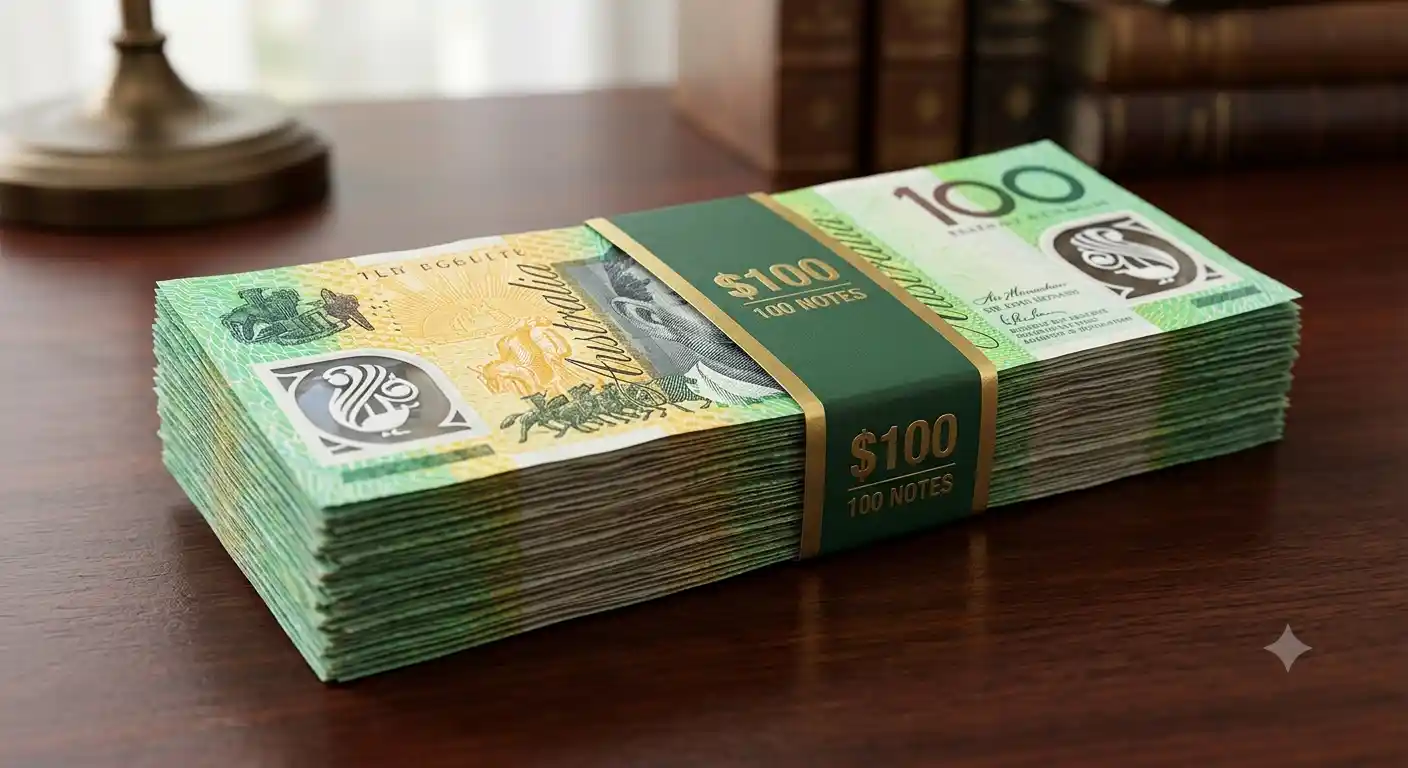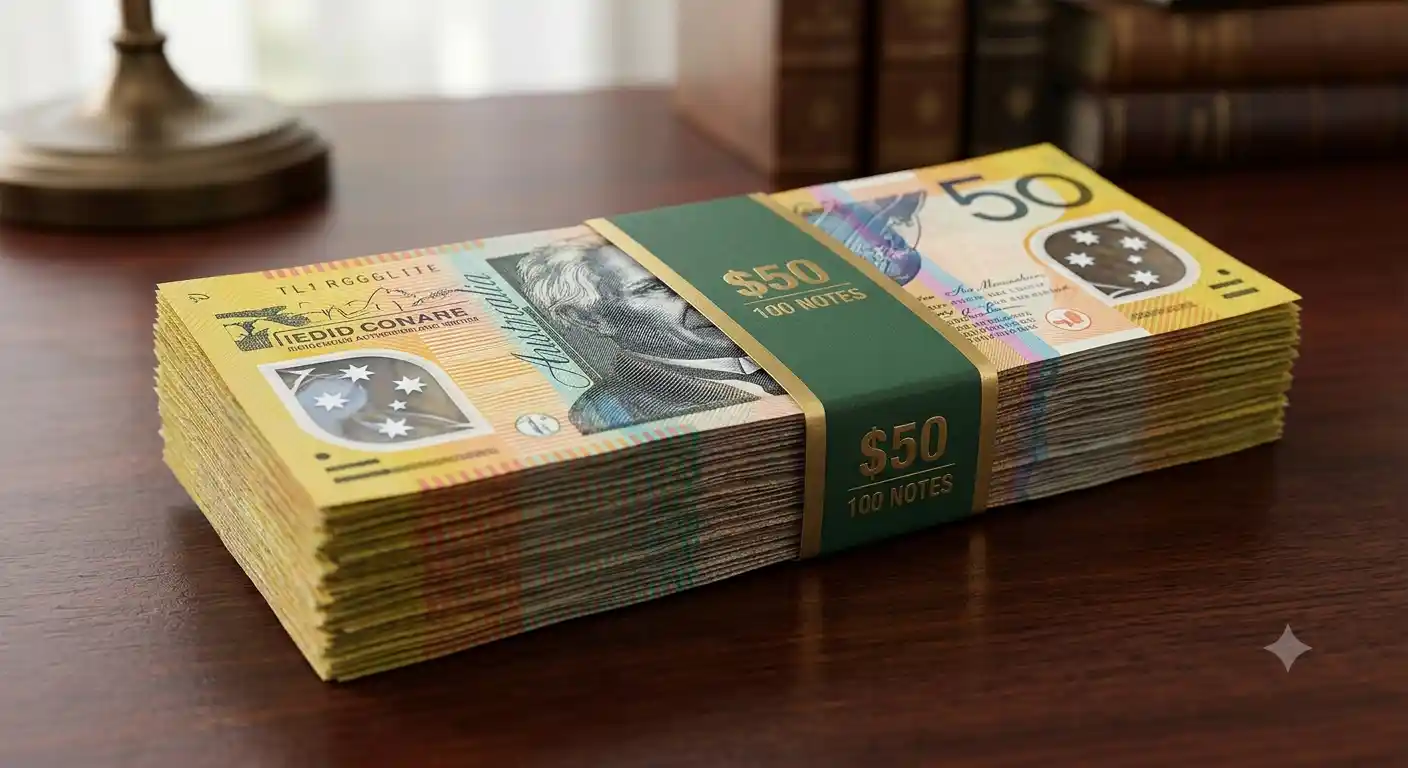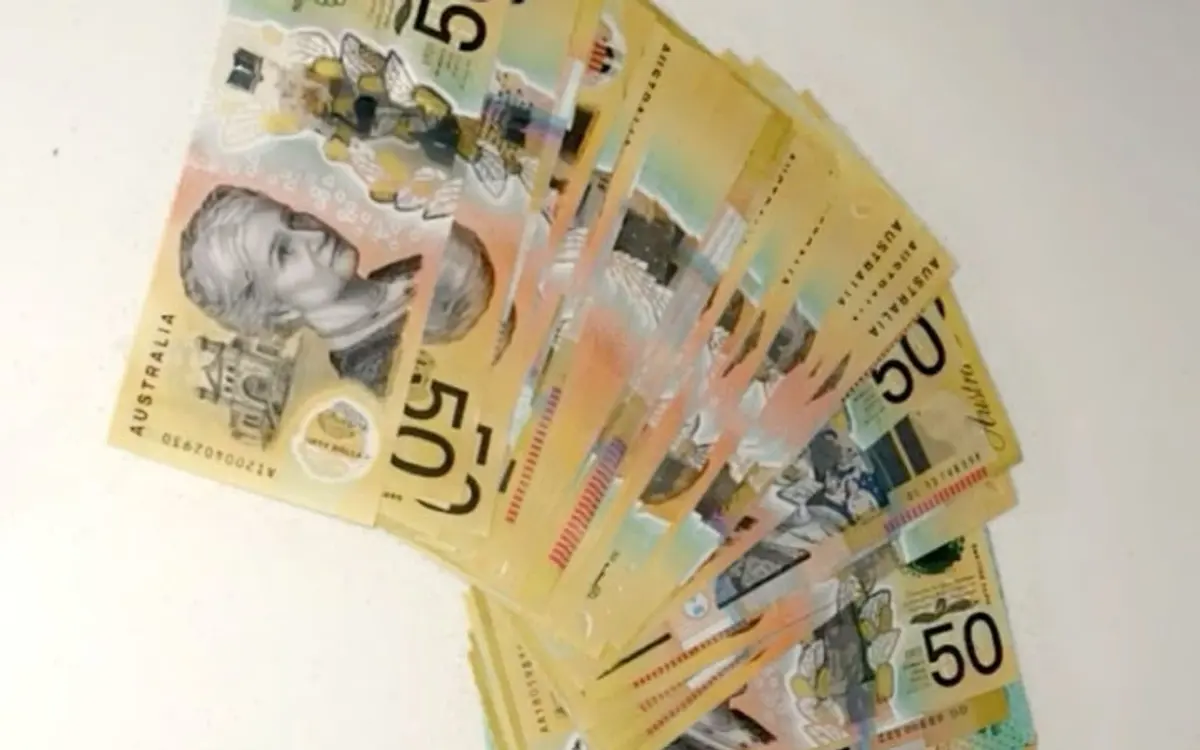
Search for "Australian polymer prop money" and you will find overseas sellers offering polymer notes that copy real Australian banknotes. They look impressive in photos. They also sit much closer to the legal line than a paper prop with a clear specimen marking. This guide explains the difference between polymer and paper prop notes in Australia, why it matters for a production, and what to check before you buy.
It is general information, not legal advice. For a specific project, read the legislation and speak to your own lawyer.
The short answer
For most film, television, theatre and photography work, a paper reproduction with permanent specimen markings is the safer choice. Genuine Australian banknotes are polymer. A prop made of the same material and printed to copy the real design is much harder to tell apart from the real thing, which is exactly what the law and the Reserve Bank's guidance are concerned about.
Why material matters
The Reserve Bank publishes guidance on reproducing banknotes, and the offences are in the Commonwealth Crimes (Currency) Act 1981. Both focus on whether a reproduction could be mistaken for a genuine note. Material is one of the clearest differences a person can feel in the hand:
| Paper specimen prop note | Polymer lookalike | |
|---|---|---|
| Feels like | Paper | Plastic, close to a real note |
| Specimen marking | Permanent, prominent | Often faint, small or missing |
| Distinct from real notes | Yes, by material and marking | Much less |
| Overseas shipping risk | Lower | Higher; parcels can be held at the border |
| Typical use | Film, TV, theatre, photography | Often marketed with misleading claims |
Red flags in polymer prop listings
- Claims that notes "pass the pen test", are "undetectable" or "indistinguishable".
- Specimen markings described as "optional" or removable.
- No Australian ABN, address or phone number.
- Discreet or unmarked packaging sold as a benefit.
- Delivery from overseas with no tracking or signature.
Any one of these is a reason to walk away. Our guide to the legal difference between fake money and prop money explains why, and local vs overseas prop money suppliers compares the options.
What a compliant paper prop looks like
A PROPPS note is printed double-sided on matte archival paper and carries permanent specimen markings. The size, material and treatment deliberately differ from a genuine note, so the prop reads as money on camera and as a reproduction in the hand. You can see the standard on our compliance page, and the guide to Crimes Act and RBA prop money rules goes into detail.
Compare the notes yourself in the New Notes range, from the $5 to the $100.
Will paper look real enough on camera?
Yes. Cameras see colour, print detail and mass, not polymer. A matte paper note reads cleanly under studio and LED lights, and it avoids the glare polymer can throw. Read how to judge high quality prop money on camera and lighting prop money for camera.
Overseas polymer: the shipping and customs problem
Polymer lookalikes ordered from overseas can be seized or held at the border, delaying a shoot. Local supply avoids this, and an Australian supplier gives you an invoice, a contact and recourse if a count is wrong. Our post on where to buy prop money legally sets out the steps.
A buyer checklist
- Ask for a close-up photo of an actual note, front and back, with the marking visible.
- Confirm the material and how it differs from a genuine note.
- Check for an ABN, a physical address and a phone number.
- Confirm signed-for delivery and an invoice.
- Read the refund terms.
What the law and the RBA focus on
The Commonwealth Crimes (Currency) Act 1981 deals with making and possessing items that look like Australian currency without a lawful basis. The Reserve Bank's guidance on reproducing banknote images exists for a practical reason: genuine Australian notes have security features, and convincing copies cause problems for shops and banks. The factors that matter are how closely a reproduction copies a real note, how clearly it is marked, how it is described and what it is used for.
A paper reproduction with a permanent marking does well on each factor. A polymer lookalike that copies the design closely, with faint marking and sales copy that boasts about realism, does badly on each. This is the plain reason we do not sell polymer notes and recommend against buying them online from unknown sellers.
What productions ask for, and what they actually need
Many art departments ask for "polymer so it feels real". It is a reasonable instinct, but it solves a problem the camera does not have. A lens sees colour, print detail and the way light falls on the surface. It does not see polymer. The feel in the hand matters for a close-up when an actor handles the note, and a matte paper note handles convincingly in that situation too, because audiences do not hold the note themselves.
If a scene needs an actor to flick through a wad of notes, the sound can matter. Paper notes make a soft riffling sound that reads as cash on set microphones. A stack of plastic notes sounds different and can be picked up as "wrong" on a well-recorded track. Test the sound with your sound recordist before the day.
Insurance, locations and public places
Insurers and location owners ask about the props that will be on set. A paper note with a clear marking and an invoice from an Australian supplier is a simple answer. A polymer note from an overseas listing with no invoice is a complicated one. Productions that shoot in banks, shops or public places should be especially careful, because staff and members of the public may see the notes and have no context. Keep the notes under control, brief the crew and keep the supplier details on hand.
Buying checklist for polymer claims
If you are still considering a polymer lookalike, ask the seller in writing: Where is the marking and how large is it? Who is the business and what is its ABN? How is the parcel shipped and who signs for it? What happens if it is held at the border? Honest sellers answer quickly and in detail. If the answers are vague, you have your answer.
For a clear alternative, our notes are available from the $5 to the $100 and in strapped stacks. The film and TV prop currency pack covers a full set.
Which one should your production choose?
For nearly all film, television, theatre and photography work, choose paper with a clear specimen marking from a supplier you can identify. It looks right on camera, handles well, ships without drama and makes the paperwork simple. Polymer lookalikes add legal and shipping risk with no benefit the lens can see. If a director insists on a feel-in-hand test, order a small sample set first and let the art department handle it. Most teams decide within a minute.
A short decision guide
| Your situation | Best choice |
|---|---|
| Film, TV or theatre with insurance and a production file | Paper with specimen marking and an invoice |
| Photoshoot or content shoot | Paper set from a local supplier |
| Tight deadline in Australia | Local paper stock, shipped by Express Post |
| Overseas listing with no marking or invoice | Walk away |
| Anything marketed as undetectable | Walk away |
Summary
Polymer is what real Australian notes are made of, and that is exactly why a polymer prop is risky. Paper reproductions with permanent specimen markings give productions the look they need and keep everyone, from the art department to the insurer, comfortable. Our compliance page and the guide to where to buy prop money legally explain how to check any supplier.
Orders start at $300 AUD, delivery is free from $500 AUD and cryptocurrency payments receive a 10% discount. Parcels ship from Eltham, Melbourne by Australia Post Express with a signature on delivery. Read the shipping policy for times and the refund policy for the 3 to 8 business day refund window.