If you are searching for a prop dollar, prop cash or prop money, you could be looking for three different things. A prop dollar is one note. Prop cash is the loose, handled look of money on screen. Prop money is the product category that covers both. Getting the terms straight saves you from ordering the wrong quantity, the wrong finish or the wrong denomination, and it helps an insurer or production manager read your brief the same way you do.
This guide sets out what each term means for Australian film, television, theatre and photography work, how the three differ in practice, and how to turn the words into an order. It is general information about props, not legal advice.
Quick answer: how the three terms differ
- Prop dollar: a single reproduction note, usually described by its denomination, for example a $50 prop dollar. It is what you hold in a close-up.
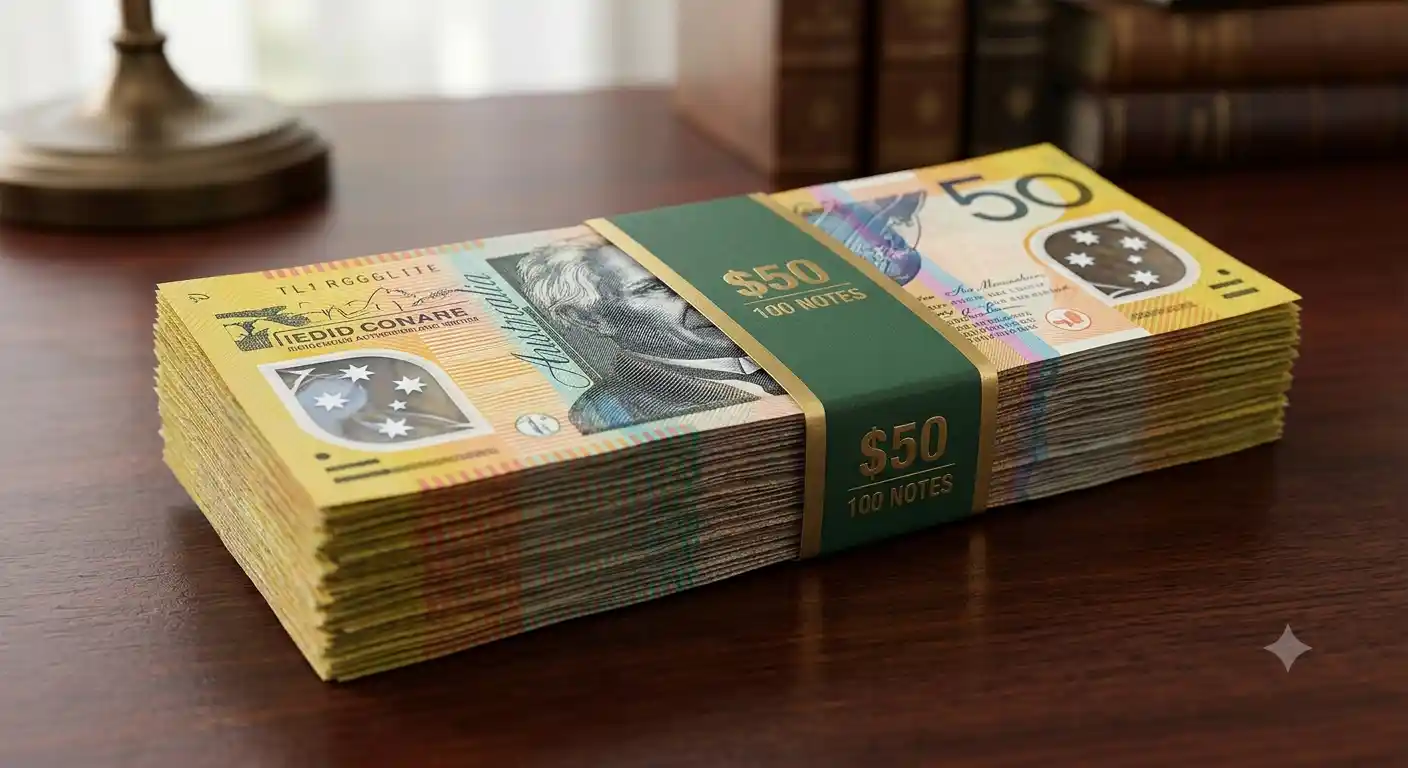
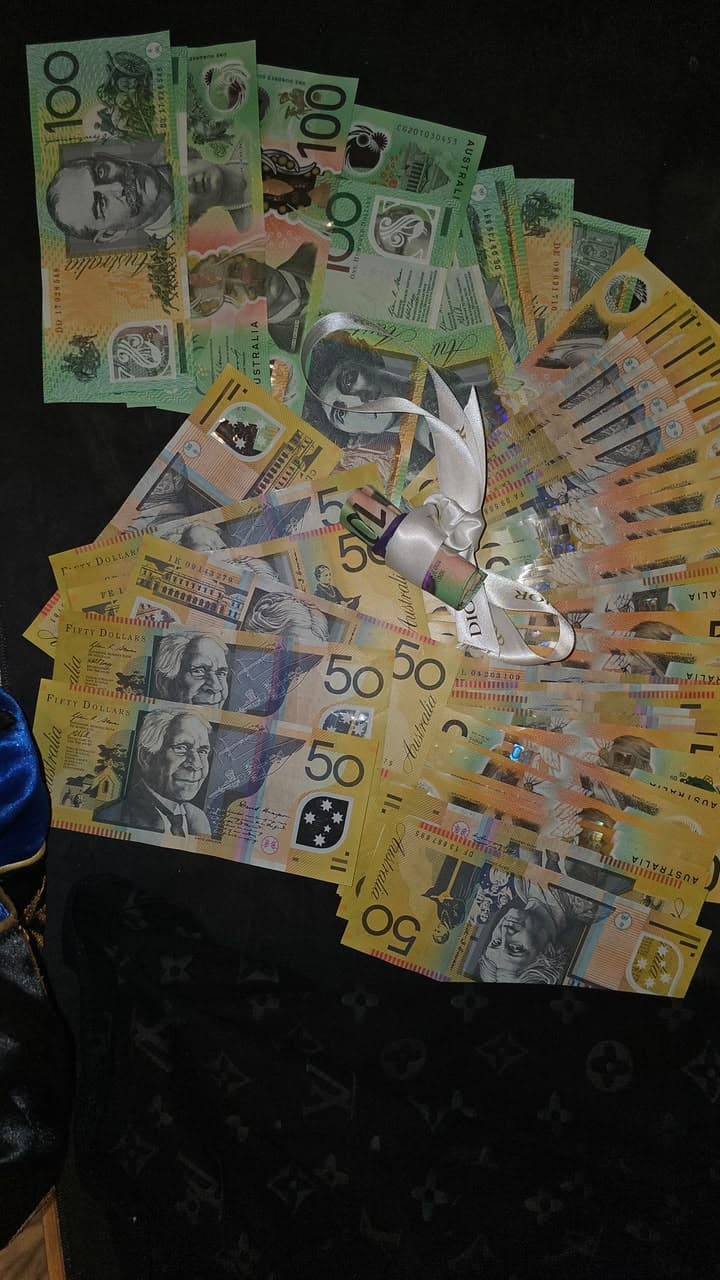
- Prop cash: money as it reads in a scene, meaning bundles, rolls, fanned notes and loose handfuls that look used rather than fresh from the printer.
- Prop money: the umbrella term for every non-legal tender reproduction note made for productions, from one note to a pallet.
In practice a prop dollar is the unit, prop cash is the look and prop money is the product. Most orders mix all three: a few hero notes for the close-up and enough stacks to fill the frame.
What is a prop dollar?
A prop dollar is one reproduction banknote. On a call sheet it appears as "hero note", "insert note" or by denomination. The hero note is the one the camera sees, so it gets the most attention: crisp printing, even colour and clear specimen markings. Australia's notes are polymer, and our reproductions are paper-based, which is one of the deliberate differences that keeps them clearly distinct from genuine currency.
If you need a close-up of a single note, start with the denomination pages: the $5, $10, $20, $50 and $100 products each carry the specimen markings required by our standard.
What is prop cash?
Prop cash is the on-screen impression of money. A single crisp note says "new". A handful of slightly bent notes in a coat pocket says "this has been spent". Art departments talk about prop cash when they plan texture, wear and volume rather than a single note. That is why the art department guide to weathering prop cash matters: the same stack looks different depending on how it has been handled.
Prop cash is usually bought in stacks. A money stack is a bundled quantity of one denomination or a mix, strapped the way a bank would strap them, so it reads as a real sum even at a distance. If you are planning how many you need, our guide on how much prop money you need for a scene gives a counting method by shot type.
What is prop money?
Prop money is the broad category: reproduction notes sold for motion pictures, television, theatre, photography and training. When someone asks "can I buy prop money in Australia", they mean the whole category, and the answer is yes when the notes are clearly marked and not used to deceive. Our post on whether you can buy prop money in Australia walks through it, and the New Notes range is where the marked reproductions live.
Side by side
| Term | What it is | Typical quantity | Best for |
|---|---|---|---|
| Prop dollar | One reproduction note | 1 to 20 | Close-ups, inserts, hero notes |
| Prop cash | The handled, lived-in look | Loose notes to small stacks | Pockets, wallets, tables, bar tops |
| Prop money | The full category | Any | Briefing, budgeting and ordering |
Which one do you actually need?
Match the term to the shot rather than the other way round.
- Close-up of a single note. You need a prop dollar in the right denomination. Check the artwork at the size the camera will see it.
- A hand counting notes. You need prop cash: a stack of the same denomination, lightly aged, with the strap on.
- A suitcase or table of money. You need prop money in volume. Buy more than you think, because notes get damaged and reshoots happen.
- A party or classroom. You probably want play money, not specimen reproductions. Read play money vs prop money first.
How the terms show up on a prop schedule
Art departments rarely write "prop cash" on a schedule without a number beside it. A tidy prop line reads like "Scene 14, bank counter, 3 x strapped stacks of $100 prop dollars, 6 loose hero notes". That one line carries all three ideas: the denomination (the prop dollar), the volume (the stacks) and the finish (the loose hero notes that have been handled). Writing it this way makes ordering quick, because your supplier can read the quantities straight off the line.
A useful habit is to give every money line three details: the denomination, the count and the condition. Denomination tells you which product page to start from. Count tells you whether you need a single note, a stack or a bulk pack. Condition tells you whether to request notes that look fresh, lightly handled or heavily worn.
Common mix-ups to avoid
- Ordering one note when you meant a stack. "A prop dollar" is one note. If the script says "a wad of cash", you need a strapped stack.
- Treating "prop cash" as a different product. It is the same reproduction notes, styled and aged. You do not need a separate supplier for it.
- Using "prop money" to mean play money. The two are made for different jobs. Play money is a toy, while prop money is a film-grade reproduction. Check which one your brief needs.
- Mixing denominations without a reason. A real till holds a mix, but a bank-vault shot usually uses one denomination per strap. Decide the look first.
- Forgetting the marking. Whatever you call the notes, they must carry a clear specimen marking.
Examples by production type
Short film or student project. A handful of prop dollars for insert shots, plus one or two stacks. Orders start at $300 AUD, so most small shoots buy a mixed stack and use it across scenes.
Television drama. Prop cash in volume: stacks of $50 and $100 for deals and payoffs, with a few hero notes. Series work often reorders for each block, so keep the supplier invoice and the count from the last order.
Theatre. Prop dollars used as stage cash, usually in a prop wallet or bundle. The audience is further away, so denomination colour matters more than fine print detail.
Photography and content. A fan of prop dollars or a stack on a table. The shot is often a close-up, so check the print quality, and read our guide to prop money for content creators before you publish.
What stays the same whichever word you use
Whatever you call it, the legal position does not change. A reproduction must be clearly distinguishable from a genuine note, marked, and used only as a prop. The Reserve Bank publishes its banknote reproduction guidance, and the offences sit in the Commonwealth Crimes (Currency) Act 1981. Our compliance page explains the specimen markings on every PROPPS note, and the longer guide to the Crimes (Currency) Act and RBA rules covers the detail.
Three habits keep any prop dollar or stack of prop cash on the right side of the line:
- Keep notes with the art department, not in a wallet.
- Never spend them, hand them over or post them as if they were real cash.
- Keep the supplier invoice on the production file.
How to order
Pick the denominations for your close-ups first, then add stacks for the volume. Orders start at $300 AUD, delivery is free from $500 AUD, and payments in cryptocurrency receive a 10% discount. Parcels leave our Eltham, Melbourne depot by Australia Post Express with a mandatory signature, usually within 24 business hours of payment. For studio-scale quantities, ask about the wholesale tiers of 10% to 30% off.
Next step
Choose your hero denomination from the New Notes range, then add a bulk money stack for the volume. If you are unsure of quantities, send us the scene breakdown from the contact page and we will suggest a count.