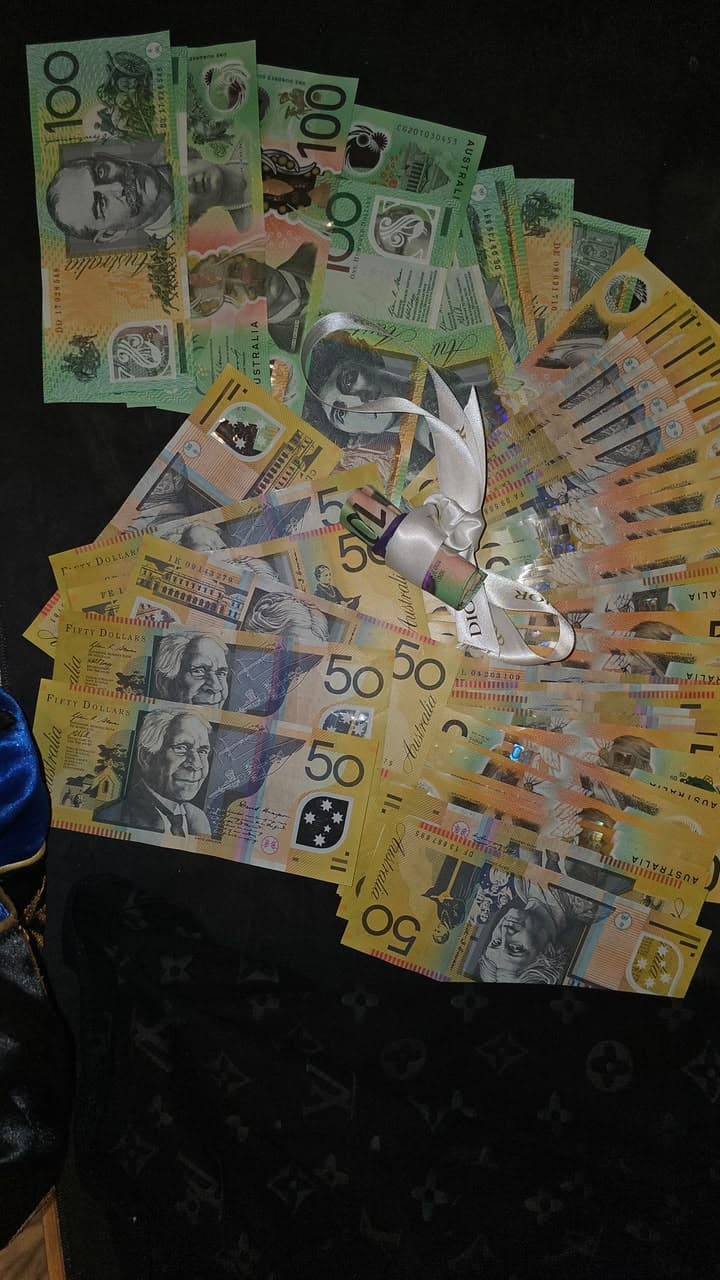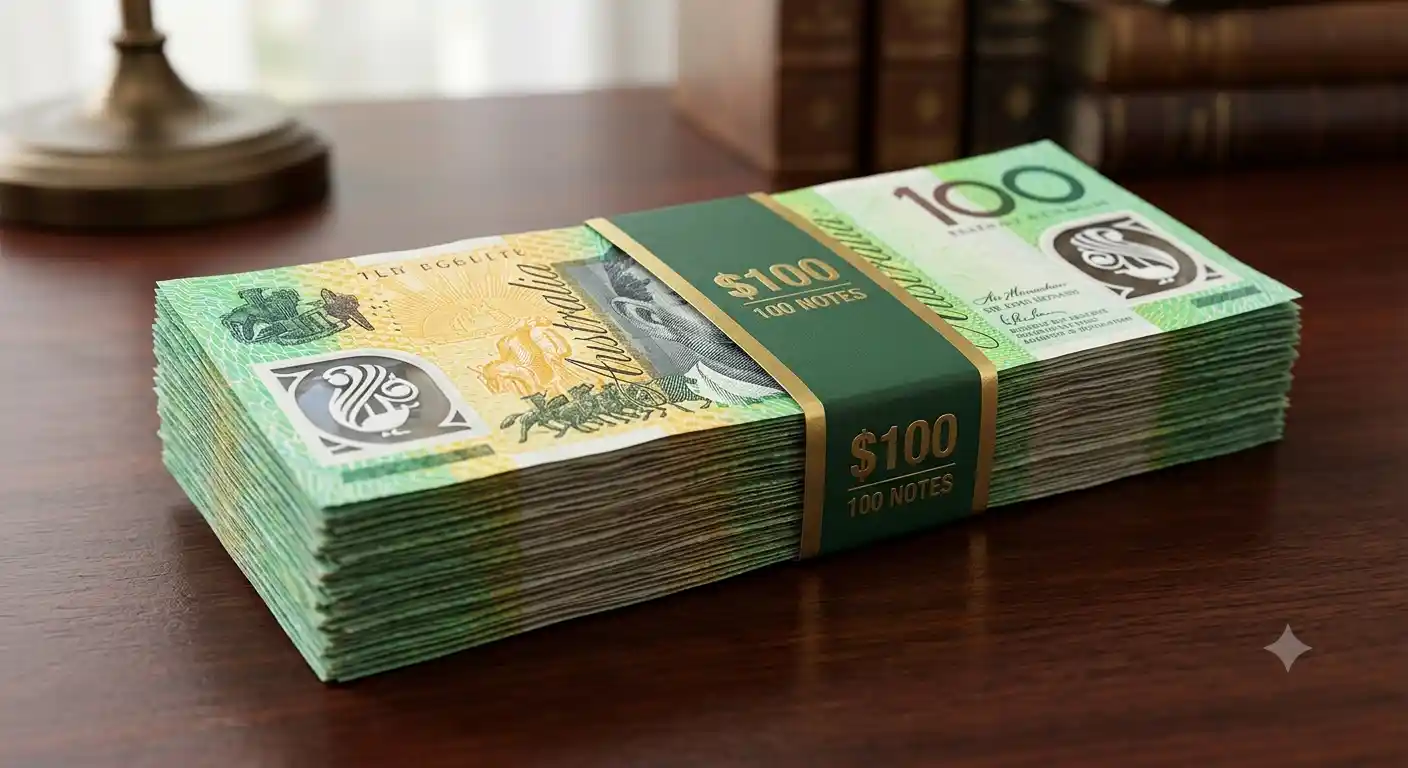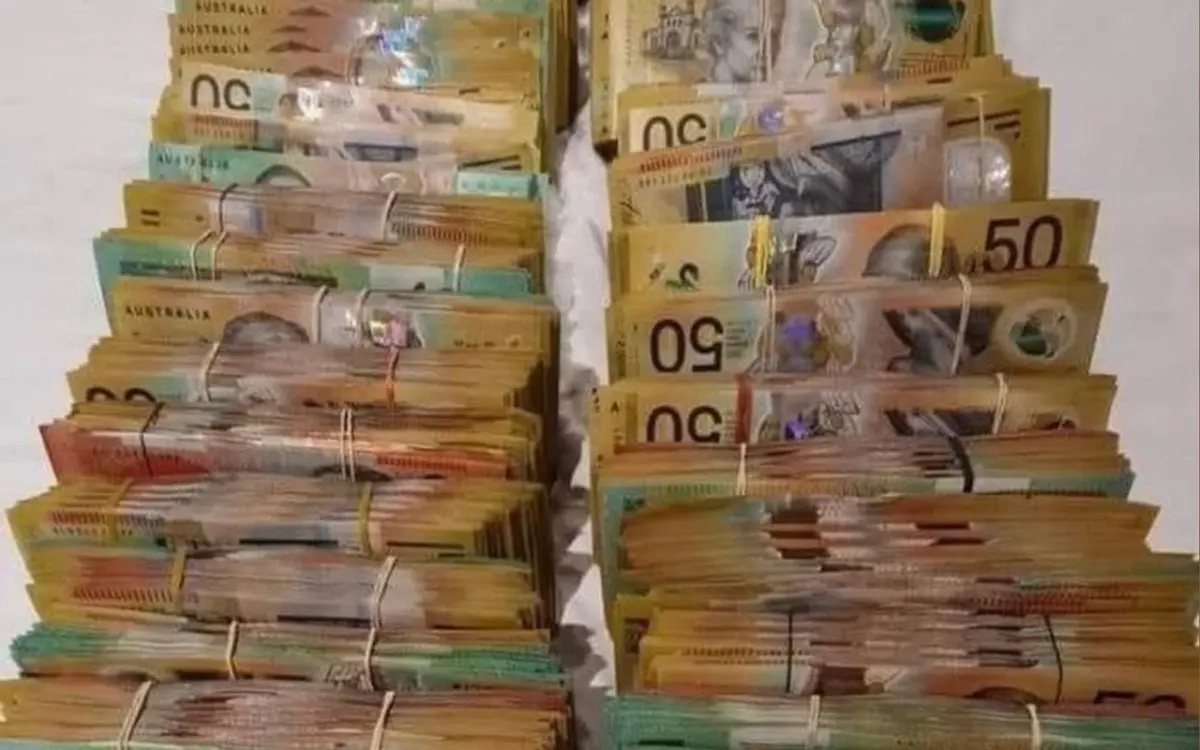
"How much is a million dollars in prop money?" is a question every heist film, bank scene and music video eventually asks. The answer has two parts: how much a stack of prop notes costs, and how many stacks it takes to fill the frame with a million dollars of face value. This guide uses our published price tiers to answer both, then shows how to get the look for less.
The face value on a prop note is not real money. Our notes are non-legal tender reproductions and must never be spent. The "million dollars" is the sum the audience sees on screen, nothing more.
The short answer
At our published tiers, 100 Stacks carries $200,000 of face value for $14,000 AUD. A million dollars of face value is therefore five of those runs: 500 stacks, or about $70,000 AUD before any wholesale discount. Cryptocurrency payments receive a further 10% off, and studio-scale orders can ask about wholesale tiers of 10% to 30% off.
Our price tiers at a glance
| Bundle | Face value | Price (AUD) | Price per $1,000 of face value |
|---|---|---|---|
| Starter Stack | $1,500 | $115 | about $77 |
| 1 Stack | $2,000 | $200 | $100 |
| 5 Stacks | $10,000 | $850 | $85 |
| 10 Stacks | $20,000 | $1,600 | $80 |
| 50 Stacks | $100,000 | $7,500 | $75 |
| 100 Stacks | $200,000 | $14,000 | $70 |
The bigger the run, the lower the cost per $1,000 of face value. The largest published bundle costs $70 per $1,000, so a million dollars of face value is about $70,000 at list price. Check the bulk money stack pack for current prices.
How many notes is that?
The note count depends on the denomination. A million dollars in $100 notes is 10,000 notes. In $50 notes it is 20,000. In $20 notes it is 50,000. Mixed stacks fall in between. This is why the denomination matters as much as the bundle size.
| Denomination | Notes for $1,000,000 face value |
|---|---|
| $100 | 10,000 |
| $50 | 20,000 |
| $20 | 50,000 |
| $10 | 100,000 |
| $5 | 200,000 |
Most productions choose $100 and $50 notes for a million-dollar look, because fewer notes fill a bag or table. Compare them in the New Notes range and read the best denominations for film and TV.
Do you really need a million dollars of face value?
Usually not. The camera sees the front stacks and the first layer of notes, not what is underneath. A common trick is a "hero" layer of real prop stacks on top and cheaper fillers underneath. Our guide to how much prop money you need for a scene shows how to count what is actually visible, and prop cash for heist and bank scenes covers vaults and bags in detail.
A briefcase holds far less than people expect. A scene that needs "one million in a case" often needs only a few stacks arranged to fill the lid. Plan the shot first, then order.
Ways to bring the cost down
- Count the visible stacks only. Fill the rest with cheaper filler.
- Pay with cryptocurrency. It earns a 10% discount.
- Ask about wholesale tiers. Larger runs qualify for 10% to 30% off; see the wholesale pricing guide.
- Mix denominations. A $100-heavy top layer and $20s underneath is a normal real-world mix.
- Reuse across scenes. Keep the notes organised and count them back in at wrap.
For what the price includes, see cheap prop money: what you are really paying for.
Paperwork and delivery for a large order
A large order is a good reason to keep the supplier invoice with the production file and to plan delivery. Parcels ship from Eltham by Australia Post Express with signature on delivery. For orders of this size we recommend contacting us first so the packing, the delivery address and the lead time are agreed. Use the contact page or the wholesale page.
What a million dollars of notes looks like physically
Ten thousand $100 notes make a stack roughly a metre tall if piled flat, and the weight is in the order of ten kilograms. Notes in strapped bundles of 100 make 100 bundles, which fit in a medium duffel bag or two small suitcases. These figures matter for the shot: a hero bag with a million dollars of $100 notes is physically heavy and bulky, and actors need to handle it believably. A bag filled with lighter filler and a top layer of real stacks looks the same on camera and is far easier to carry.
If your scene has an actor carrying the bag, test it first. A bag that looks heavy but is light, or one that is actually heavy but is carried like a light one, gives the game away. Our guide to prop cash for heist and bank scenes covers how to plan weight and bulk.
Worked examples
A briefcase scene. A standard briefcase holds only a handful of strapped bundles of 100 notes in a single layer, which is a few tens of thousands of dollars of face value in $100 notes. For a "one million in a case" line of dialogue, stage the case with four rows of stacks and let the dialogue do the rest. No one counts.
A vault shelf. A shelf of strapped $100 bundles reads as a large sum. To suggest a million, fill several shelves with the same bundle and place the hero stack at the front where the camera can see the strap.
A duffel bag. A duffel bag filled with a top layer of strapped $100 stacks and a lower layer of filler reads as millions. The first ten bundles are what the camera sees.
A table of cash. A table covered in bundles photographs as a large sum with about 20 to 30 stacks, depending on the lens and the angle, and you can test it in a few minutes.
Mixing denominations to cut the cost
A real cash drawer holds a mix of notes, and a mix looks more natural on screen than a single denomination. Use $100 notes for the stacks the camera sees most, and $50 and $20 notes in the secondary stacks. The face value of the whole pile may be lower than a million, but the look is the same. For help choosing, see the best denominations for film and TV scenes and the guide to choosing a $100 bundle size.
Is the price per stack the same for every denomination?
Our published tiers set the price by bundle size, and the face value in each tier is what the audience reads. You can mix denominations within an order. For custom quantities beyond the published tiers, or for a specific mix, contact us on the contact page and we will quote. Always check the live prices on the product page before you plan a budget, because prices and tiers can change.
Planning a budget in four steps
- Decide what the camera will see. Count the stacks in frame, not the total in the story.
- Choose the denomination. Use the table above to see how many notes each option needs.
- Match a bundle size. Use the price tiers to pick the nearest bundle, then add a margin of about 20% for damage and reshoots.
- Apply discounts. Check cryptocurrency and wholesale options before you finalise.
A worked example: a heist scene needs a bag that reads as $500,000 in $100 notes. The camera sees about 12 strapped stacks in the open bag. Order one 5 Stacks bundle ($10,000 face value, $850) as a hero set plus a few extra bundles for the top layer, and fill the rest of the bag with filler. The cost is a small fraction of a literal $500,000 of face value and the shot looks identical.
Orders start at $300 AUD, delivery is free from $500 AUD and cryptocurrency payments receive a 10% discount. Parcels ship from Eltham, Melbourne by Australia Post Express with a signature on delivery. Read the shipping policy for times and the refund policy for the 3 to 8 business day refund window.