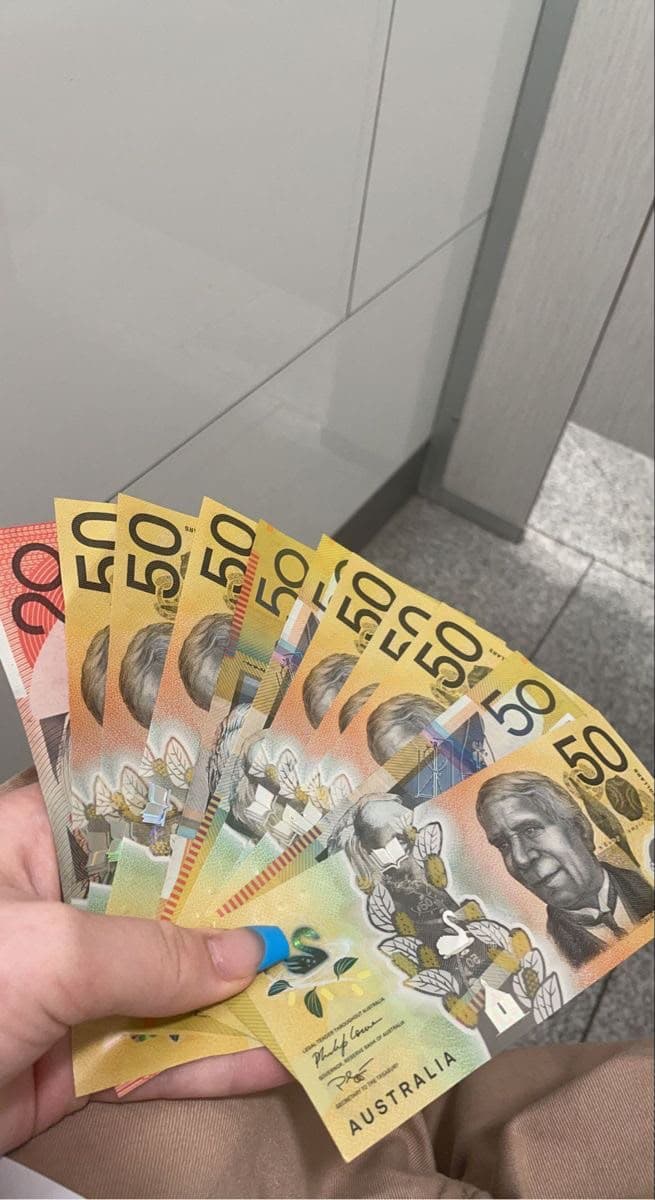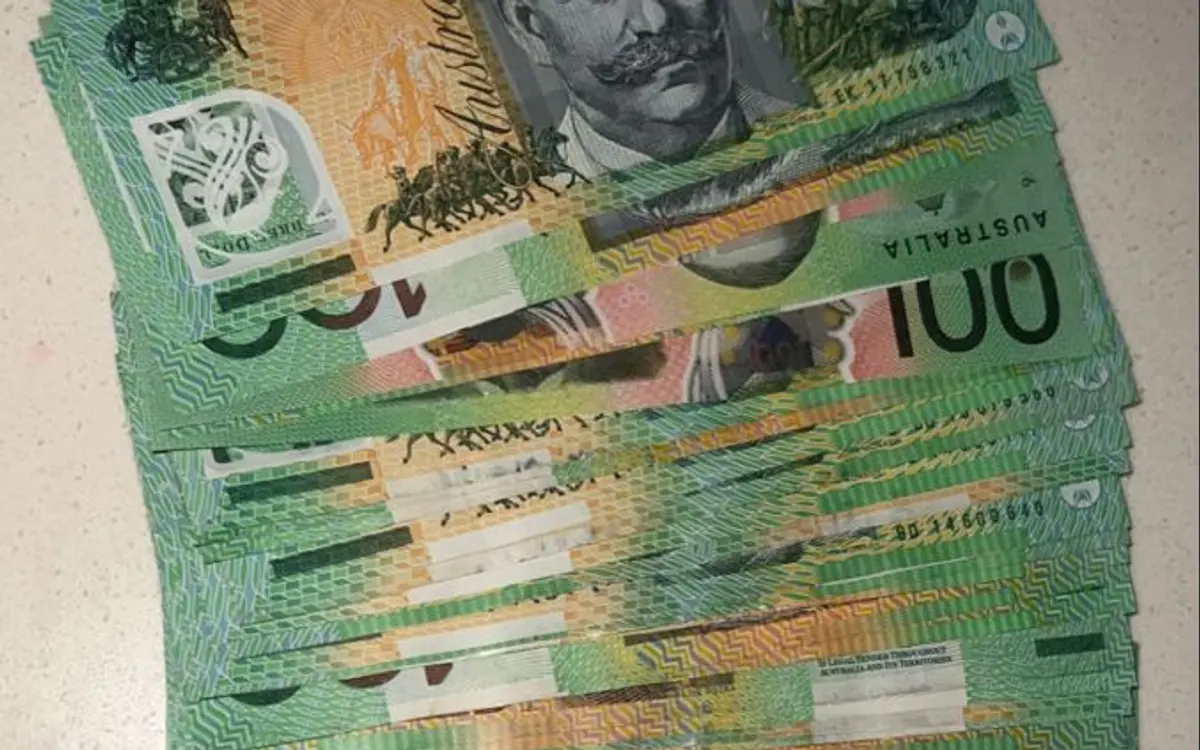
Teachers search for fake money for the classroom because money is the most concrete way to teach place value, addition, subtraction and decimals. Children can hold a $5 note and a $20 note and see why four of one equal the other. This guide sets out play money lessons by year level, how to run a class economy, how many notes you need for a class and what to check before you buy, so one purchase serves a whole year of maths.
It is general teaching and buying advice from a prop studio that makes specimen-marked notes. It is not curriculum advice, so check your own school's scope and sequence.
Why play money works for maths
Money gives children a reason to calculate. "How much change do I get?" is a real question, and a child who has to count out the answer remembers it. Play money also supports mixed ability groups: a confident student can run a till while a student who is still learning to count by fives works at the pace of a pretend shop. It is also a small step toward financial literacy, which schools increasingly teach alongside number.
The Australian Curriculum includes money and financial mathematics across the primary years, and the Australian Curriculum website lists the content for each year. Use it to match activities to what your students are learning.
Lessons by year level
| Year level | Skill | Activity |
|---|---|---|
| Foundation | Recognise and sort | Sort notes by colour and value, match a note to the same note |
| Years 1 to 2 | Count and make amounts | Count to a target amount, simple change from $10 or $20 |
| Years 3 to 4 | Two-step problems | "You have $50 and spend $17.50, how much is left?" |
| Years 5 to 6 | Budgeting and percentages | Class market with discounts, profit and loss, budgets |
Foundation. Sorting is the whole lesson. Give each child a small tray of mixed notes and ask them to group the ones that match. Keep the notes large and clear, and use low denominations.
Years 1 and 2. Run a pretend shop with price tags up to $20. Children count out the exact amount, then practise giving change. A teacher or helper acts as the bank.
Years 3 and 4. Introduce prices with cents. Children add several items, pay with a note and work out the change. Rounding to the nearest five cents is a natural extension.
Years 5 and 6. Students plan a class market: set prices, apply a discount, track takings and calculate profit. This is where a bigger quantity of notes pays off, because each student needs a float.
How to run a class economy
A class economy turns play money into a term-long project.
- Pay a wage. Students earn notes for classroom jobs such as board monitor or librarian.
- Charge rent. A small weekly charge for a desk teaches saving.
- Open a shop. Prizes and privileges are priced in notes.
- Run a bank. A student banker records deposits and withdrawals.
- Review often. At the end of each week, students count their notes and write what they learned.
Keep the rules simple, display the prices and give every student the same start. Our guide to toy money and play money for kids' games and learning has more activity ideas, and monetary toys and play money sets covers what suits each age.
How much fake money does a class need?
Plan by activity, not by class size alone.
| Activity | Notes needed |
|---|---|
| Shop game in pairs | One mixed set per pair, plus a teacher float |
| Whole-class market (24 students) | A float per student plus a bank of change |
| Class economy over a term | Enough to pay wages for the whole term, so about double the market quantity |
| Maths stations | One small bundle per station |
A rule of thumb: count the number of students who will handle notes at the same time, then add one extra set for the teacher's bank. Running out mid-lesson wastes more time than buying slightly too many.
What to look for in classroom play money
- Australian denominations. $5, $10, $20, $50 and $100 notes so children practise the amounts they will meet in real life.
- Clear play or specimen marking. Reproductions of banknotes are regulated; the Reserve Bank explains its approach on its banknote pages.
- Sturdy paper. Notes will be folded, counted and dropped hundreds of times.
- Bright, readable print. Children should tell values apart at a glance.
- A seller who invoices. Schools usually need an ABN and an invoice.
If you are comparing options, read where to buy Australian play money and what to check and play money vs prop money.
Classroom rules for play money
- Notes are for lessons only and are never used to pay in a canteen or shop.
- Count the notes out and in at the start and end of every lesson.
- Keep the notes in labelled trays or zip bags, sorted by denomination.
- Replace torn notes rather than taping them.
- Keep small coins away from under-threes and follow the age label on any pack; see Product Safety Australia for guidance.
Printable play money or a ready-made set?
A printed sheet is free for one lesson but needs ink, cutting and constant replacing. A ready-made set lasts for years and handles daily use. If you run a class economy, the sturdier set is the cheaper choice over a term.
Making play money part of a school event
Schools also use play money at fetes, book fairs, careers days and drama productions. For themed events and photo props, see fake money for parties. For a school musical or play that needs convincing cash on stage, film-grade notes from the New Notes range read better from the audience, and prop money for theatre-style shows works for a lot of school productions.
Differentiating the activity
A single set of notes can serve a mixed-ability class. Students who need support can work with $5 and $10 notes and exact-change problems. Students who are ready for more can use the full range with two-step problems, discounts or a budget with several constraints. Pair students so a confident counter works with a hesitant one, and rotate the shopkeeper role so every child practises both paying and giving change.
For students who find reading prices hard, put the price in a large number on a card with a picture, and let them count out the note by note matching. For extension, ask students to write their own word problems using the shop prices, then swap with a partner.
Assessing what students have learned
Play money lessons are easy to observe. Watch how a child counts out an amount: do they count in ones, in fives, or by grouping denominations? Listen to how they explain their change. A short exit ticket works well: "I had $50, I spent $18, so I have..." Keep a simple checklist with three columns: can make an amount, can give change, can solve a two-step problem. Students who can do all three are ready for decimals and budgeting tasks.
Storing and reusing across terms
A good set should last several years. At the end of each term, count the notes back into labelled bags, set aside any torn ones and note the quantity on a card inside the box. Keep the box flat and dry, away from windows. If several teachers share a set, write a short sign-out sheet so no one loses a bundle. Because heavier paper survives repeated use, it usually works out cheaper per lesson than replacing thin sets each year.
Involving families
Class economies work better when families know about them. A short note home explaining the system helps parents reinforce the idea of earning, saving and spending, and it avoids the surprise of a child asking for "rent" at dinner. Some schools run a family market night where children use their class earnings to buy small items, which is a fun way to finish a unit.
Ordering for a school
Browse the event and party prop cash pack and the full play money range. Orders start at $300 AUD, delivery is free from $500 AUD and cryptocurrency payments receive a 10% discount. We invoice with an ABN for school and council records and ship from Eltham, Melbourne by Australia Post Express with a signature on delivery. See the shipping policy for times and the refund policy for the 3 to 8 business day refund window.